
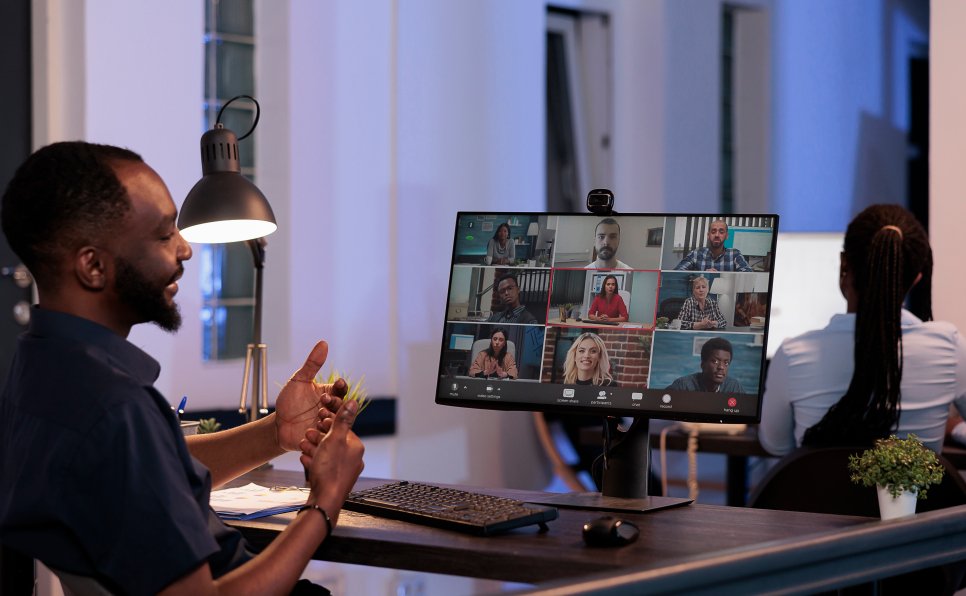
The “American Dream” of business has shifted. In 2025, it is no longer about the corner office with a view; it is about the freedom to build a high-performance team that works from anywhere—from a condo in Miami to a cabin in Montana. However, while the benefits of remote work are visible on the balance sheet (lower rent, higher retention), the risks are invisible and growing.
Many US businesses are operating under a dangerous assumption: they believe their pre-2020 insurance policies followed them home. They didn’t. The decentralised nature of virtual teams has created massive cracks in standard coverage. To survive the legal and cyber threats of the modern era, businesses must pivot to Specialized Insurance & Liability strategies designed for a borderless workforce.
The “Silent” Cyber Threat: Home Networks as Backdoors
The most immediate threat to your virtual team is not a competitor; it is the insecure Wi-Fi router in your employee’s living room. Corporate offices have enterprise-grade firewalls; home offices often have default passwords and outdated firmware.
The BYOD (Bring Your Own Device) Trap
In 2025, it is estimated that over 70% of remote employees use personal devices for at least some work tasks. This “shadow IT” creates a nightmare for security. If an employee’s personal iPad—used by their child to download games—is also logged into your company Slack or CRM, it becomes a gateway for hackers. Standard General Liability policies rarely cover data breaches originating from unmanaged personal devices. You need robust Cyber Liability Insurance that specifically covers “Bring Your Own Device” (BYOD) scenarios.
Ransomware Evolution in 2025
While the total number of cyberattacks has stabilised, the cost of each attack has surged. Recent data indicate that while claim frequency is down, the severity of ransomware losses has increased by approximately 17%. Hackers are no longer just locking data; they are exfiltrating it and threatening to release client secrets. Without specialised cyber coverage that includes “Cyber Extortion” and “Data Restoration,” a single click by a remote worker can lead to a six-figure payout.
Workers’ Compensation Nightmares: The “State Lines” Trap
Workers’ Compensation is state-regulated. This system worked well when everyone drove to the same building in the same city. It breaks down completely when your marketing manager decides to move from New York to Texas without telling you.
The Jurisdictional Gap
If an employee is injured while working in a state where you do not have active Workers’ Compensation coverage, you are technically uninsured for that claim. You could face:
- Civil Lawsuits: The employee can sue you directly for negligence.
- State Fines: Penalties for non-compliance can be severe.
- Claim Denial: Your existing carrier may refuse to pay because the risk (the new state) was not disclosed.
To mitigate this, businesses must add “All States” Endorsements or Extraterritorial Coverage to their policies, ensuring that protection follows the employee, wherever they roam.
“Course and Scope” in the Living Room
If an employee trips over a power cord in the office, it is a work injury. But what if they trip over their dog while walking to their home desk? Courts in the USA are increasingly ruling in favour of employees in these “grey area” cases. Specialised Insurance & Liability reviews are essential to define the “home workspace” boundaries and limit your exposure to non-work-related home accidents.
Employment Practices Liability (EPLI) in a Hybrid World
The culture of remote work has given rise to a new wave of employee lawsuits, making Employment Practices Liability Insurance (EPLI) more critical than ever.
The “Out of Sight” Discrimination Risk
A growing trend in 2025 is “proximity bias” litigation. Remote workers are alleging they were passed over for promotions or raises in favour of in-office staff, simply because they weren’t “seen” by management. These discrimination claims can be costly to defend. An EPLI policy covers the legal fees associated with defending against claims of wrongful failure to promote or unfair treatment.
Wage and Hour Disputes
When employees work from home, the line between “on the clock” and “off the clock” blurs. If a non-exempt employee answers an email at 9:00 PM and isn’t paid overtime, you are violating the Fair Labour Standards Act (FLSA). Wage and hour lawsuits are among the most expensive to settle. While standard EPLI often excludes wage and hour claims, Specialised Insurance & Liability riders can be purchased to add a sub-limit for defence costs related to these specific disputes.
Equipment & Property: Who Pays When the Laptop Breaks?
A common myth is that your employee’s Homeowners or Renters insurance will cover company property. It won’t. Most personal policies explicitly exclude “business property.” Conversely, your standard Commercial Property policy typically covers assets at the listed business address.
If you issue $3,000 MacBooks to 20 remote employees, you have $60,000 in assets floating around the country, largely uninsured.
- The Fix: You need an “Inland Marine” policy (sometimes called a “Floater”). Despite the nautical name, this specialised coverage protects movable property in transit or at temporary locations (like a home office).
Conclusion
The shift to remote work is not a temporary trend; it is a permanent structural change in the US economy. Consequently, your risk management strategy must evolve. Relying on legacy policies for a digital-first workforce is a recipe for disaster.
To protect your virtual empire, you must embrace a Specialised Insurance & Liability framework:
- Cyber Liability with BYOD and Social Engineering coverage.
- Multi-State Workers’ Comp to cover the “digital nomads.”
- EPLI to defend against remote-discrimination and wage claims.
- Inland Marine to protect your distributed hardware.
Don’t wait for a claim to reveal your coverage gaps. The cost of a specialised policy is a rounding error compared to the price of a lawsuit.